
Waterproofing systems are used to prevent water from penetrating into building structures.
In Singapore, where buildings are exposed to frequent rain, high humidity and temperature changes, waterproofing plays a critical role in maintaining structural integrity and preventing water damage.
However, not all waterproofing systems are the same.
Different areas — such as bathrooms, balconies, roofs and external walls — require different types of waterproofing solutions.
Understanding how these systems work helps in identifying why leaks occur and which type of repair may be appropriate.
This guide is based on real waterproofing failures and repair scenarios observed across Singapore properties, where the selection of the correct system was critical to resolving leakage effectively.
Quick Answer: What Are the Main Types of Waterproofing Systems?
The most commonly used waterproofing systems in Singapore include:
– cementitious waterproofing
– liquid-applied waterproofing systems
– torch-on membrane systems
– polyurethane (PU) injection systems
– chemical infusion or seepage control treatments
Each system serves a different purpose and is suited for different types of leakage problems.
How Waterproofing Systems Actually Work
Waterproofing systems are designed to:
– block water entry
– redirect water flow
– or seal pathways within a structure
Depending on the system:
– some form a protective layer on the surface
– others penetrate into the material to seal pores or cracks
The effectiveness of a waterproofing system depends on:
– correct application
– surface preparation
– suitability for the specific leak type
The selection of the correct system depends on identifying the actual cause of the leak — applying a system that does not address the underlying failure mechanism will not resolve the issue.
Common Types of Waterproofing Systems
Cementitious Waterproofing
A cement-based coating applied directly onto concrete surfaces.
Common uses:
– bathrooms
– internal wet areas
– water-retaining structures
Characteristics:
– rigid system
– bonds well to concrete
– commonly used in new construction
– Less flexible and may be affected by structural movement over time.
Liquid-Applied Waterproofing (Multi-Coat Systems)
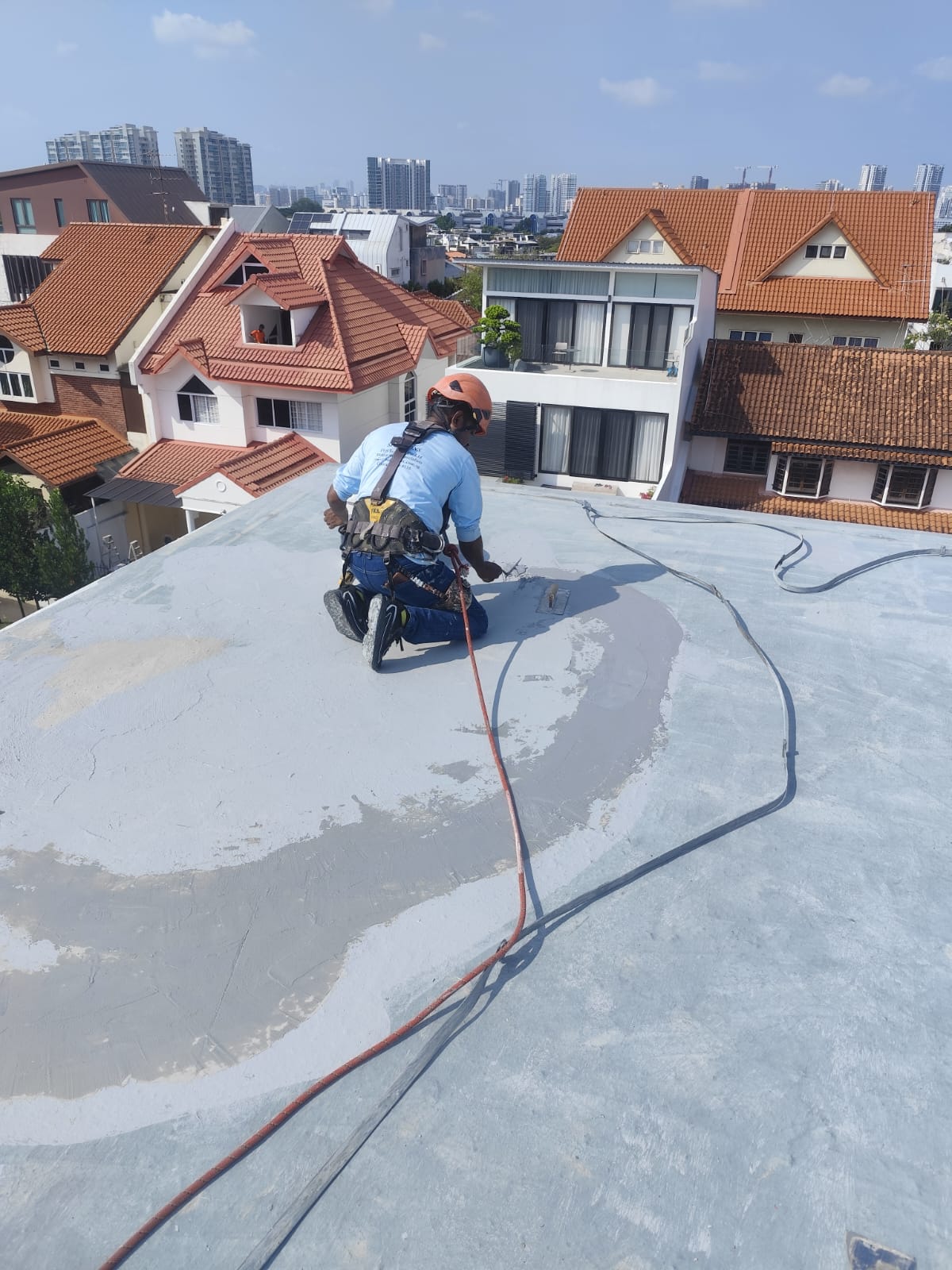
A liquid membrane applied in multiple layers to form a seamless waterproof barrier.
Common uses:
– balconies
– flat roofs
– exposed surfaces
Characteristics:
– flexible
– seamless application
– adapts well to complex shapes and details
– Requires proper thickness control and application method.-
Torch-On Membrane Systems
A pre-formed membrane applied using heat (blowtorch) to bond to the substrate.
Common uses:
– flat concrete roofs
– exposed roof decks
Characteristics:
– durable multi-layer system
– strong resistance to water penetration
– widely used for long-term roof protection
– Requires proper installation and detailing at edges and upturns.
Polyurethane (PU) Injection Systems
A method of injecting resin into cracks or voids within concrete.
Common uses:
– structural cracks
– basement walls
– leakage through concrete slabs
Characteristics:
– seals internal pathways
– does not require surface removal
– suitable for targeted repair
– Used for specific leakage paths rather than large surface areas.
Chemical Infusion / Seepage Treatment
A method where chemicals are introduced into porous concrete to reduce water seepage.
Common uses:
– internal wet areas
– minor seepage conditions
Characteristics:
– non-invasive
– works through capillary absorption
– limited effectiveness for larger cracks
– Typically suitable for micro-seepage rather than major leakage.
Each system has specific limitations — no single system is suitable for all leakage scenarios, and incorrect system selection is one of the most common reasons repairs fail.
Why Different Areas Require Different Systems
Different parts of a building behave differently when exposed to water.
Bathrooms and Internal Wet Areas
Require systems that:
– bond well to concrete
– integrate with floor finishes
– handle daily water exposure
Balconies and External Areas
Require systems that:
– withstand UV exposure
– handle rain and temperature changes
– remain flexible
Flat Roofs
Require systems that:
– resist ponding water
– provide long-term durability
– handle thermal expansion
Structural Cracks and Basements
Require systems that:
– seal internal pathways
– stop water under pressure
– Using the wrong system in the wrong location is one of the most common causes of repair failure.
Common Misconceptions About Waterproofing
“One Waterproofing System Works for Everything”
Different problems require different solutions.
“Waterproofing Always Means Hacking and Replacing”
Some systems allow targeted repair without full removal.
“If the Surface Looks Sealed, the Leak Is Fixed”
Water may still be travelling beneath the surface.
“All Waterproofing Systems Last the Same Duration”Lifespan depends on:
system type
– exposure conditions
– quality of installation
Why Waterproofing Systems Fail
Waterproofing systems typically fail due to:
- ageing and material deterioration
- structural movement and cracking
- poor surface preparation
- incorrect application method
- inadequate detailing at joints and edges
In many cases, failure occurs at weak points rather than across the entire surface.
When Waterproofing Is Not the Actual Problem
Not all leaks are caused by waterproofing failure.
Some may be due to:
– concealed pipe leaks
– external wall ingress
– drainage or ponding issues
– penetration or joint defects
Misidentifying the cause can lead to unnecessary or ineffective repairs.
Summary
Waterproofing systems play a critical role in preventing water ingress, but they are not one-size-fits-all solutions.
Different systems serve different purposes
Correct selection depends on the type of leak
Application quality and detailing are just as important as material
Understanding how waterproofing works helps in identifying why leaks occur and how they should be addressed.
Still Not Sure What’s Causing Your Balcony Leak?
Different waterproofing systems are designed for different types of problems, and applying the wrong system — even correctly — will not resolve the issue.
If you are dealing with a leak and are unsure whether it is caused by waterproofing failure or another source, a proper diagnosis should be carried out before selecting any repair method.
You may request a professional leak assessment from Flux Solutions to determine the exact source and appropriate repair approach.