
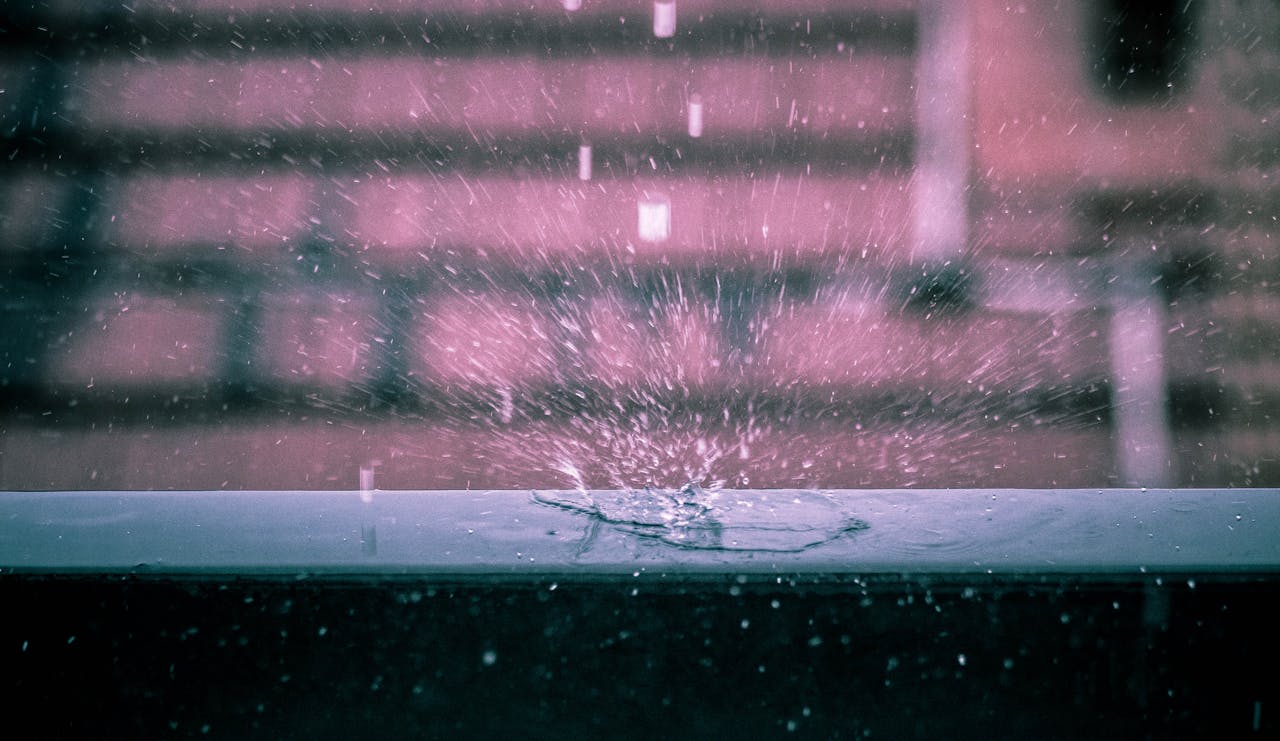
External wall leaks are among the most common causes of water ingress in Singapore buildings, especially during periods of heavy or wind-driven rain. These leaks originate from the building envelope — the external surfaces that protect the structure from weather exposure.
What makes external wall leaks particularly difficult to identify is this:
👉 water rarely appears where it actually enters.
Rainwater can penetrate through small defects in external walls, then travel behind plaster, within wall cavities or along structural elements before becoming visible on interior surfaces. Understanding how these leaks occur is essential to identifying the true entry point.
This guide is based on real external wall leak investigations across Singapore buildings, including cases involving rainwater ingress through facade defects assessed by Flux Solutions.
Quick Answer: What Causes External Wall Leaks?
Most external wall leaks in Singapore are caused by one or more of these:
- structural cracks in concrete walls
- render and plaster cracking
- expansion joint sealant failure
- deteriorated or debonded external tile facades
- failed sealant around window frames and perimeters
- pipe and service penetration seal failure (aircon piping, exhaust vents)
- concrete spalling exposing reinforcement
- weep hole blockage in cavity wall systems
- precast panel joint failure
- wind-driven rain forcing water through small openings under pressure
👉 External wall leaks are rain-dependent — if the leak only appears during or after rainfall, the external wall is the primary suspect.
How External Walls Resist Water
External wall systems in Singapore vary by building type. Each resists water differently and each fails differently.
Plastered / Rendered Concrete Walls
The most common system in Singapore residential buildings. A cement render coat is applied over the structural concrete wall, then painted. The render and paint layers provide weather resistance. Water is kept out by the continuity of the render surface — any crack, gap or deterioration in the render creates an entry point.
External Tile Facades
Common in older HDB blocks and condominiums. Tiles are bonded to the external wall surface with adhesive. The tile and grout provide the first line of weather resistance. However, tiles can debond over time, creating voids between the tile and the substrate that trap and channel water behind the facade.
Curtain Wall / Cladding Systems
Found in commercial buildings and newer developments. These are non-structural facade systems attached to the building frame. Water resistance depends on the seal integrity at panel joints, gaskets and drainage cavities within the system.
Precast Panel Construction
Precast concrete panels are common in Singapore HDB construction. Panels are joined with sealant at the joints. Water resistance depends entirely on the sealant condition at every panel joint — when the sealant fails, rain enters directly at the joint.
External Wall Failure Mechanisms
Structural Cracks in Concrete
Cracks in the structural concrete wall due to settlement, thermal movement or loading.
👉 These cracks extend through the full wall thickness, providing a direct path for water.
👉 Structural cracks tend to be wider and may show movement over time.
👉 Water entry through structural cracks can be significant during heavy rain.
Render and Plaster Cracking
Hairline cracks in the external render or plaster coat due to shrinkage, thermal cycling or substrate movement.
👉 These cracks may be superficial but still allow rain penetration under wind pressure.
👉 Render cracks are often widespread — multiple small cracks across the facade can collectively allow significant water ingress.
👉 Cracks at floor slab lines are particularly common due to differential movement between the slab and the wall.
Expansion Joint Sealant Failure
Expansion joints are designed to accommodate building movement. They are sealed with flexible sealant.
👉 Sealant has a limited lifespan — UV degradation, thermal cycling and building movement cause it to crack, shrink or debond.
👉 Failed expansion joint sealant allows rain to enter directly into the joint, which often connects to internal spaces or structural cavities.
👉 These are high-priority failure points due to the volume of water that can enter.
External Tile Facade Failure
Debonded or hollow external tiles create voids behind the tile surface.
👉 Water enters through cracked grout or tile edges and becomes trapped in the void.
👉 Trapped water migrates along the substrate and can enter the building at any point along the facade — often far from the visible tile damage.
👉 This is a common and difficult-to-diagnose failure in older Singapore buildings where widespread tile debonding has occurred.
Window Frame and Perimeter Sealant Failure
The sealant bead around window frames deteriorates with age and UV exposure.
👉 Gaps form between the window frame and the wall opening, allowing rainwater entry.
👉 Water may enter at the top or sides of the window and travel downward within the wall before surfacing at the window sill or below the window on the interior.
👉 Failed flashing or absent drip moulds above windows can direct water into the frame junction rather than shedding it away.
Pipe and Service Penetration Failure
Aircon piping, exhaust vents, electrical conduits and other services pass through the external wall.
👉 Each penetration requires a properly sealed sleeve or collar.
👉 Sealant around penetrations degrades over time, and pipe movement can break the seal.
👉 These are frequently overlooked during leak investigations because they are small openings — but under wind-driven rain, even a small gap allows significant water entry.
Concrete Spalling
Sections of concrete cover break away, exposing the steel reinforcement beneath.
👉 Water enters directly at the spalled area and corrodes the reinforcement further.
👉 Corrosion causes expansion of the steel, which leads to further spalling — a progressive cycle.
👉 Spalling areas are direct water entry points and must be repaired to stop both ingress and structural deterioration.
Weep Hole Blockage (Cavity Wall Systems)
Cavity walls have weep holes at the base to drain moisture that enters the cavity.
👉 If weep holes are blocked by mortar droppings, debris or render, water accumulates in the cavity instead of draining out.
👉 Trapped water migrates inward through the inner wall leaf, surfacing as interior damp.
Wind-Driven Rain: Why It Matters in Singapore
Wind-driven rain is one of the most significant factors in external wall leakage in Singapore due to the monsoon climate.
During heavy rain with wind:
👉 Rain is pushed horizontally against the building facade under pressure.
👉 Water is forced into cracks, joints and gaps that would remain dry in vertical rainfall.
👉 Higher floors experience greater wind pressure and therefore greater rain penetration risk.
This explains why:
- Leaks only occur during heavy rain with wind from a specific direction.
- Upper floors leak more than lower floors on the same facade.
- Small cracks that appear insignificant allow substantial water entry under wind pressure.
👉 Any leak investigation for external walls must consider prevailing wind direction and rain intensity — inspections in dry weather will not replicate the conditions that cause the leak.
Diagnostic Behaviour: How to Identify an External Wall Leak
Leak only during rain — subsides in dry weather
Likely related to:
- render or concrete cracking
- expansion joint sealant failure
- tile facade failure
- window perimeter sealant failure
👉 This is the defining characteristic of external wall leaks. If the leak stops completely in prolonged dry weather, the source is external.
Leak near or around windows during rain
Likely related to:
- window frame sealant failure
- absent or failed flashing/drip mould above window
- render cracking adjacent to the window opening
👉 Check the top and sides of the window from outside — water may enter above and travel down to appear at the sill.
Leak depends on wind direction
Strong indicator of:
- wind-driven rain penetrating through small cracks or joints on the windward facade
- penetration seal failure on the exposed face
👉 If the leak only occurs with rain from a specific direction, the entry point is on that face of the building.
Leak appears on interior wall but no external crack is visible
Likely related to:
- tile facade debonding — water entering behind tiles and migrating along the substrate
- cavity wall weep hole blockage
- water entering at a higher level and travelling downward within the wall before surfacing
👉 The absence of a visible external crack does not mean the wall is watertight.
Leak worsens on upper floors
Likely related to:
- greater wind pressure at height driving more water into defects
- exposed facade with less sheltering from adjacent structures
👉 Upper floor units on exposed facades are disproportionately affected by wind-driven rain.
Verification Methods
Always confirm the entry point before commencing repair.
External Water Spray Test
Direct a controlled water spray at specific sections of the external wall — one area at a time — while an observer monitors the interior for water appearance. Work systematically from bottom to top to isolate the entry point. This is the most reliable method for confirming external wall ingress.
Internal Monitoring During Rain
Observe the interior symptom location during active rainfall, noting the timing of water appearance relative to rain onset, intensity and wind direction. Immediate onset suggests a direct crack or joint; delayed onset suggests water accumulating behind finishes before breakthrough.
Thermal Imaging
Infrared thermography can detect moisture within the wall that is not yet visible on the surface. Effective for identifying the extent of water migration behind plaster, tiles or finishes.
Tap Test (External Tiles)
Tapping external tiles with a suitable tool identifies hollow or debonded tiles by the change in sound. Hollow tiles indicate voids behind the facade where water can accumulate and migrate.
Sealant and Joint Inspection
Visual inspection of all sealant lines — window perimeters, expansion joints, panel joints, pipe penetration seals — for cracking, shrinkage, debonding or missing sealant.
Why External Wall Leaks Are Often Misdiagnosed
Common diagnostic mistakes:
- Sealing the interior wall surface instead of repairing the external defect — interior sealants do not stop water from entering the wall; they only redirect it to appear elsewhere.
- Assuming no visible external crack means no external source — tile debonding, sealant failure and cavity issues are not visible from a surface inspection alone.
- Overlooking wind-driven rain as a factor — inspections in calm, dry weather do not replicate the conditions that cause the leak.
- Ignoring pipe and service penetrations — small openings around aircon pipes and vents allow significant water entry under wind pressure but are routinely overlooked.
- Repairing only the area directly behind the interior stain — water may have entered at a completely different location on the facade and travelled to the stain point.
👉 External wall leaks require diagnosis from the outside, not the inside.
These misdiagnoses are commonly encountered in practice, where repairs are carried out internally without addressing the actual external entry point.
Summary
External wall leaks in Singapore are driven by rainwater ingress through defects in the building envelope.
👉 Water enters through cracks, failed sealant, debonded tiles, pipe penetrations and expansion joints
👉 Wind-driven rain is a major factor — leaks may only occur under specific wind and rain conditions
👉 Water travels behind finishes and along structural paths before becoming visible — the interior stain does not indicate the entry point
👉 Always verify the external entry point through systematic water spray testing before commencing repair
👉 Repair must target the external defect, not the interior symptom
Understanding how rainwater interacts with the building facade is key to identifying the true source of leakage.
Not Sure Where the Water Is Entering From?
External wall leaks often involve hidden entry points, water migration behind finishes and wind-driven rain conditions that are not visible from the interior.
If you are experiencing rain-dependent leaks, wall dampness or water ingress around windows and facade areas, a proper external assessment is required to identify the actual entry point before any repair is carried out.
You may request a professional leak assessment from Flux Solutions to determine the exact source and appropriate repair approach.