
Condensation is one of the most commonly misdiagnosed causes of apparent water damage in Singapore buildings. Moisture appearing on walls, ceilings, floors and windows is frequently reported as a “leak” — triggering waterproofing investigations, hacking and repairs that address a problem that does not exist.
The fundamental issue is this:
👉 condensation and leakage produce visually similar symptoms — damp patches, water droplets, peeling paint, mould growth — but they have completely different causes and require completely different solutions.
A leak involves water entering the building from an external source (rain, pipes, waterproofing failure). Condensation involves moisture already present in the indoor air depositing onto cold surfaces as liquid water. No water has entered the building — it was already there as humidity.
In Singapore’s tropical climate, where relative humidity routinely exceeds 80–90%, condensation is extremely common. Understanding how to distinguish it from actual leakage is essential to avoiding unnecessary and ineffective repairs.
This guide is based on real-world cases of condensation misdiagnosed as leakage in Singapore properties, including investigations carried out by Flux Solutions.
Quick Answer: How Do You Tell Condensation from a Leak?
The key differentiators:
- Condensation occurs on cold surfaces (aircon walls, chilled water pipes, cold floors). Leaks occur regardless of surface temperature.
- Condensation correlates with aircon use or temperature differences. Leaks correlate with rain, water usage or pipe pressure.
- Condensation does not produce a water trail or drip path from a source above. Leaks typically show directional water movement (drip lines, stain trails, flow patterns).
- Condensation produces uniform dampness across a surface. Leaks produce localised stains, drip points or concentrated wet areas.
- Condensation worsens in humid weather and improves with ventilation. Leaks are unaffected by ventilation or humidity levels.
- Condensation produces mould but no salt efflorescence. Rising damp produces salt deposits.
👉 If the dampness appears only when the aircon is running and disappears when it is off (with ventilation), it is almost certainly condensation — not a leak.
How Condensation Works
Condensation occurs when moist air comes into contact with a surface that is at or below the dew point temperature. The moisture in the air changes from vapour (invisible gas) to liquid water (visible droplets or dampness) on the cold surface.
The Dew Point
The dew point is the temperature at which air becomes saturated and can no longer hold all its moisture as vapour. Any surface at or below this temperature will cause moisture to condense out of the air onto it.
👉 In Singapore, where ambient temperatures are 28–34°C and relative humidity is 80–90%, the dew point is typically 24–27°C.
👉 Any surface cooled below 24–27°C will attract condensation from the surrounding air.
👉 Aircon systems cool room air to 20–24°C — the walls, floor and ceiling surfaces adjacent to the cooled zone can easily drop below the dew point, particularly where insulation is poor.
Why Singapore Has a Severe Condensation Problem
👉 High ambient humidity means the air carries a large amount of moisture at all times.
👉 Aircon is ubiquitous — virtually every residential and commercial space in Singapore uses aircon, creating large temperature differences between cooled interiors and hot, humid exteriors.
👉 Concrete, masonry and tile surfaces conduct heat readily — when one side is cooled by aircon and the other side is exposed to hot, humid outdoor air, the interior surface temperature drops below the dew point.
👉 Poorly insulated walls, slabs and ceilings are particularly vulnerable — there is no thermal barrier to prevent the cold from the aircon penetrating to the surface.
Where Condensation Occurs in Singapore Buildings
Condensation is not random — it occurs at predictable locations based on thermal behaviour.
Walls Directly Cooled by Aircon
The wall behind or adjacent to the aircon indoor unit is cooled by the refrigerant pipework and the cold air discharge.
👉 The wall surface temperature drops below the dew point.
👉 Moisture from the humid air (particularly on the other side of the wall, or from air infiltration) condenses on the cold surface.
👉 Appears as damp patches, water droplets or mould growth on the wall surface near the aircon unit.
👉 Frequently misdiagnosed as a pipe leak from the aircon condensate line.
External Walls of Aircon-Cooled Rooms
The interior surface of an external wall is cooled by the aircon. The exterior surface is exposed to hot, humid outdoor air.
👉 Moisture from the outdoor air migrates through the porous wall and condenses on the cold interior surface.
👉 Alternatively, humid air infiltrates through gaps, windows or doors and condenses on the cold wall.
👉 Appears as widespread dampness or mould on the interior face of external walls — particularly in bedrooms with aircon running continuously overnight.
Ceiling Slab Beneath an Unconditioned Space
The ceiling of an aircon-cooled room that is directly beneath an unconditioned space (roof, uncooled unit above, common corridor).
👉 The ceiling slab is cooled from below by the aircon. The top surface is exposed to warm, humid conditions.
👉 Moisture condenses on the cool underside of the slab.
👉 Appears as damp patches or water droplets on the ceiling — frequently misdiagnosed as a roof leak or bathroom leak from the unit above.
Floor Slab in Contact with the Ground (Ground Floor)
Ground floor slabs in aircon-cooled spaces.
👉 The slab is cooled by the aircon from above. The underside is in contact with the ground, which is warm and moist.
👉 Moisture from the ground migrates through the slab and condenses at the cold upper surface.
👉 Appears as persistent floor dampness — frequently misdiagnosed as rising damp.
👉 The differentiator: this dampness appears or worsens when the aircon is running and reduces when the aircon is off with windows open. True rising damp is constant regardless of aircon use.
Chilled Water Pipes and Aircon Condensate Lines
Chilled water pipes (in commercial buildings) and aircon refrigerant pipes that are not properly insulated.
👉 The pipe surface is well below the dew point.
👉 Moisture condenses directly on the pipe and drips onto the ceiling, wall or floor below.
👉 Appears as localised dripping from a specific point — frequently misdiagnosed as a pipe leak.
👉 The differentiator: the dripping stops when the aircon system is switched off.
Window Glass and Frames
Window glass surfaces in aircon-cooled rooms.
👉 The glass is cooled by the interior aircon and exposed to hot, humid air on the exterior.
👉 Condensation forms on the interior glass surface and runs down, pooling at the window sill.
👉 Appears as water at the window sill — frequently misdiagnosed as a window frame leak.
👉 The differentiator: the water appears only when the aircon is running and the windows are closed. Opening the window (equalising temperature) stops the condensation.
Bathroom and Kitchen Surfaces After Hot Water Use
Steam from hot showers or cooking raises the humidity within the room.
👉 Moisture condenses on cooler surfaces — mirrors, tiles, ceiling, metal fixtures.
👉 In poorly ventilated bathrooms, the moisture persists and promotes mould growth.
👉 This is not related to waterproofing failure — it is condensation from internal humidity.
Condensation vs Leakage: Detailed Comparison
Timing and Correlation
Condensation:
👉 Correlates with aircon use — appears when aircon is running, reduces or disappears when aircon is off with ventilation.
👉 Worsens in humid weather (monsoon season, rainy periods with high humidity).
👉 May appear overnight when aircon runs continuously in bedrooms.
Leakage:
👉 Correlates with rain (external wall, roof, window leaks), water usage (bathroom, kitchen leaks) or is continuous (pipe leaks).
👉 Does not change with aircon operation.
👉 Rain-correlated leaks stop in prolonged dry weather. Condensation does not — it depends on humidity and temperature, not rain.
Appearance and Pattern
Condensation:
👉 Uniform dampness across a surface — even, diffuse moisture without directional flow.
👉 No drip trails, no water flow lines, no stain patterns tracking from a source point.
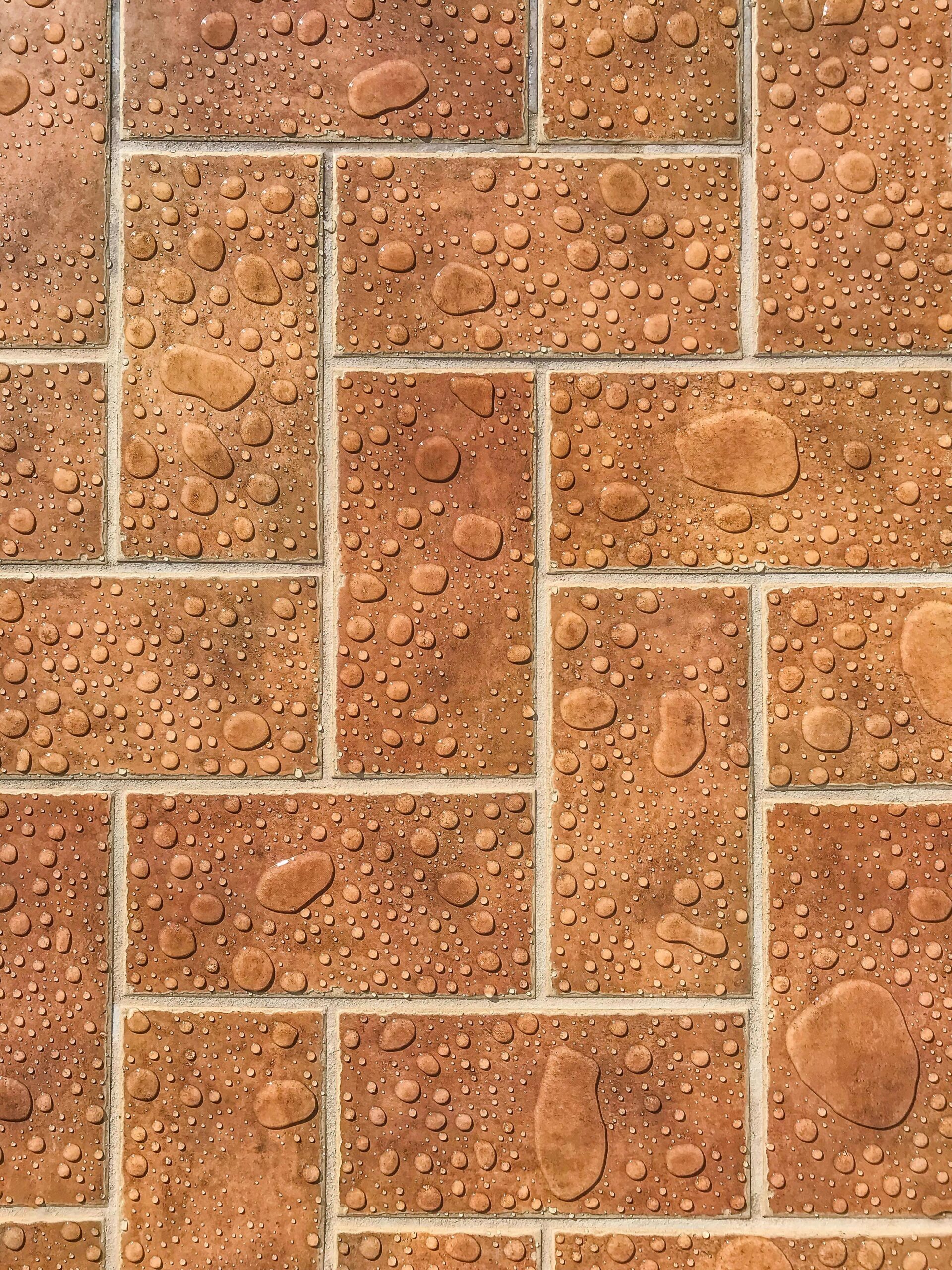
👉 Water droplets may be visible on the surface (like a cold glass of water).
👉 Mould growth in the damp area (mould thrives on surface moisture in humid conditions).
Leakage:
👉 Localised stains, drip marks or concentrated wet areas.
👉 Directional water movement — stain trails, drip paths, gravity-driven flow patterns.
👉 May produce mineral staining (calcium deposits from water passing through concrete).
👉 Salt efflorescence (white crystalline deposits) indicates rising damp — condensation does not produce salt deposits.
Location
Condensation:
👉 On cold surfaces — walls adjacent to aircon, external walls of cooled rooms, ceilings below unconditioned spaces, uninsulated pipes, window glass.
👉 Typically widespread across the cold surface, not concentrated at a specific point.
Leakage:
👉 At specific entry points — cracks, joints, penetrations, failed sealant, membrane breaches.
👉 May appear far from the cold surfaces (not temperature-dependent).
Response to Ventilation
Condensation:
👉 Improves significantly with ventilation — opening windows, running fans, or dehumidifying the space reduces condensation by lowering indoor humidity and equalising temperature.
Leakage:
👉 Unaffected by ventilation. A real leak continues regardless of whether windows are open or fans are running.
The Aircon Test: A Simple Diagnostic Method
The single most effective way to differentiate condensation from leakage in a Singapore building.
Step 1: Turn off the aircon in the affected room completely.
Step 2: Open windows to ventilate the space and allow the surface temperatures to equalise with ambient conditions.
Step 3: Observe the symptom location over 24–48 hours.
👉 If the dampness disappears or significantly reduces → condensation. The cold surface was attracting moisture from the humid air. No leak exists.
👉 If the dampness persists unchanged → leakage. The moisture source is independent of aircon operation. Investigate using the standard diagnostic framework (WHEN, WHERE, WHAT).
Limitations:
👉 This test does not work if the observation period coincides with rain — rain-correlated leaks will appear regardless of aircon operation.
👉 Perform the test during a dry weather period for a clear result.
👉 In some cases, both condensation and a leak coexist — the aircon test will reduce the condensation component but the leak component will persist.
When Condensation and Leakage Coexist
In some situations, both condensation and an actual leak are present simultaneously.
👉 A minor waterproofing deficiency allows a small amount of moisture into the slab or wall. This moisture alone would not produce a visible symptom.
👉 However, the aircon cools the surface below the dew point, and condensation adds to the moisture, making the combined dampness visible.
👉 Turning off the aircon reduces the condensation but the minor leak moisture remains — though it may be so slight that it is not visible without the condensation amplifying it.
This is why diagnosis must be systematic:
👉 Perform the aircon test first to isolate the condensation component.
👉 If residual dampness remains with the aircon off, investigate for a leak source.
👉 Address both issues separately — insulation for the condensation, repair for the leak.
How to Prevent and Manage Condensation
Condensation is not a defect — it is a physics-driven phenomenon. It can be managed but not eliminated in Singapore’s climate without addressing the thermal and moisture conditions.
Improve Insulation
👉 Insulating the interior surface of external walls, ceiling slabs and floor slabs reduces the surface temperature drop, keeping the surface above the dew point.
👉 Thermal insulation board, insulated plasterboard or spray-applied insulation are common solutions.
👉 Pipe insulation on all chilled water and refrigerant pipes prevents condensation dripping.
Improve Ventilation
👉 Ventilation removes humid air from enclosed spaces, reducing the moisture available for condensation.
👉 Exhaust fans in bathrooms and kitchens extract steam and humidity at the source.
👉 Allowing periodic air exchange in aircon-cooled rooms reduces the humidity buildup.
Use Dehumidifiers
👉 Dehumidifiers actively remove moisture from the indoor air, lowering the relative humidity and reducing condensation risk.
👉 Effective in enclosed spaces where ventilation is limited (store rooms, basements, server rooms).
Control Aircon Temperature
👉 Setting the aircon to a higher temperature (24–25°C rather than 18–20°C) reduces the temperature difference between the cooled surface and the dew point, reducing condensation.
👉 In many cases, a modest temperature increase significantly reduces condensation without sacrificing comfort.
Address Thermal Bridges
👉 Thermal bridges — structural elements that conduct heat directly between the interior and exterior (concrete beams, columns, slab edges) — create cold spots where condensation concentrates.
👉 These cold spots need localised insulation to prevent persistent condensation at specific points.
Why Condensation Is So Commonly Misdiagnosed as Leakage
- The symptoms look identical — damp patches on walls, water on ceilings, pooling at window sills. Without understanding the underlying cause, the visual appearance cannot distinguish the two.
- Contractors default to waterproofing repairs — when a resident reports dampness, the default response in Singapore is to investigate waterproofing, hack tiles and inspect the membrane. If the cause is condensation, the hacking finds no membrane failure — but the contractor may re-waterproof anyway, the aircon is turned back on, and the dampness returns. The “failed repair” leads to further hacking.
- The aircon connection is not tested — the simple step of turning off the aircon and observing is rarely performed as a first diagnostic step. If it were, many unnecessary investigations would be avoided.
- Mould is assumed to indicate a leak — mould growth on walls is associated with “water problems” and therefore assumed to be a leak. In reality, mould grows on any surface with sufficient moisture — condensation provides exactly this without any leak being present.
- Rising damp is diagnosed on upper floors — persistent dampness on the floor or lower wall of an upper floor unit is sometimes attributed to rising damp, which is impossible above ground level. The cause is almost always condensation on the cold floor slab of an aircon-cooled unit above an unconditioned space.
👉 The aircon test should be the first diagnostic step for any dampness complaint in a Singapore building. It takes 24–48 hours, costs nothing, and eliminates the most common misdiagnosis before any investigation or repair work begins.
This misdiagnosis is frequently encountered in real site investigations, where waterproofing repairs are carried out unnecessarily before the actual cause is identified.
Summary
Condensation is the deposition of moisture from humid air onto cold surfaces — it is not a leak, and it does not involve water entering the building from an external source.
👉 In Singapore’s high-humidity climate with ubiquitous aircon use, condensation is extremely common and is the single most frequently misdiagnosed “leak”
👉 Condensation correlates with aircon use — it appears when the aircon is running and reduces when it is off with ventilation. Leaks are independent of aircon operation.
👉 Condensation produces uniform dampness and mould but no drip trails, no directional staining and no salt efflorescence. Leaks produce localised stains, drip paths and directional water movement.
👉 The aircon test — turning off the aircon and observing for 24–48 hours — is the simplest and most effective first diagnostic step for any dampness complaint
👉 Condensation and leakage can coexist — the aircon test isolates the condensation component so any residual leak can be investigated separately
👉 Condensation is managed through insulation, ventilation, dehumidification and aircon temperature control — not through waterproofing repair
👉 Performing the aircon test before any investigation or hacking prevents the most common and most costly misdiagnosis in Singapore buildings
Understanding the difference between condensation and leakage is the single most important diagnostic skill for anyone dealing with dampness in Singapore buildings.
Not Sure Whether It’s Condensation or a Leak?
Condensation and leakage can appear very similar, but require completely different solutions. Applying waterproofing repairs to a condensation problem will not resolve the issue and often leads to unnecessary cost.
If you are unsure whether the dampness you are seeing is due to condensation or an actual leak, a proper on-site assessment can confirm the cause before any repair is carried out.
You may request a professional leak assessment from Flux Solutions to accurately determine the source of the problem.