
Rising damp is a specific type of moisture ingress that affects ground floor structures — where water from the soil beneath or adjacent to the building rises upward through the concrete slab, walls and finishes by capillary action.
Unlike other leak types that involve water flowing downward or laterally, rising damp moves upward — against gravity — through the porous matrix of concrete, masonry and mortar. This makes it fundamentally different from rain ingress, pipe leaks or waterproofing failure.
What makes rising damp particularly frustrating is this:
👉 it is not triggered by any event. There is no rain correlation, no usage correlation, no burst pipe. The dampness is persistent, slow and progressive — present day and night, worsening gradually over months and years.
In Singapore, where the water table can be high and the ground is frequently saturated by heavy rainfall, rising damp affects ground floor units, landed properties and ground-level commercial spaces.
This guide is based on real rising damp cases, observed by Flux Solutions, across Singapore ground floor properties, including moisture profiling and investigation of slab and wall systems under actual site conditions.
Quick Answer: What Causes Rising Damp?
Rising damp in Singapore is caused by one or more of these:
- absent damp-proof membrane (DPM) beneath the ground floor slab
- failed or deteriorated damp-proof membrane
- absent or failed damp-proof course (DPC) in masonry walls
- high water table saturating the soil beneath the slab
- poor site drainage allowing water to accumulate against the building perimeter
- capillary action drawing groundwater upward through porous concrete, mortar and masonry
- salt contamination in the ground floor structure accelerating moisture absorption
- damaged DPM from post-construction works (penetrations, service installations)
👉 Rising damp is a ground floor condition only. If similar symptoms appear on upper floors, the cause is not rising damp — it is a different mechanism (pipe leak, lateral migration, condensation).
How Rising Damp Actually Works
Rising damp is driven by capillary action — the same physical process that draws water up through a sponge or a paper towel.
The Capillary Mechanism
Concrete, masonry, mortar and plaster are porous materials containing networks of tiny capillary channels. When the base of these materials is in contact with water (saturated soil beneath the slab or against the wall footing), surface tension within the capillaries draws water upward through the material.
👉 The water does not need pressure to rise — capillary action alone can draw water upward to a height of 1.0–1.5 metres in masonry and concrete, depending on pore size and material porosity.
👉 The water carries dissolved salts (chlorides, sulphates, nitrates) from the soil and from within the concrete and masonry. As the water evaporates from the wall or floor surface, the salts are deposited — forming visible salt efflorescence (white crystalline deposits).
👉 The height to which dampness rises depends on the balance between the rate of capillary rise and the rate of evaporation from the wall surface. In Singapore’s high-humidity environment, evaporation is slow — meaning water rises higher before it can evaporate.
The Damp-Proof Membrane (DPM)
The DPM is a waterproof sheet (typically polyethylene) or liquid-applied membrane installed beneath or within the ground floor slab during construction. Its purpose is to break the capillary path — preventing groundwater from rising through the slab into the floor finishes above.
👉 If the DPM is intact and continuous, capillary moisture is blocked at the membrane level and cannot reach the floor surface.
👉 If the DPM is absent, punctured, or has deteriorated, there is no barrier — water rises freely through the slab.
The Damp-Proof Course (DPC)
The DPC is a horizontal barrier built into masonry walls at a low level (typically just above ground level) to prevent moisture from rising up through the wall from the footing.
👉 In concrete-framed buildings (most Singapore buildings), the DPC is less relevant because the walls are typically non-structural masonry on a concrete slab. The DPM beneath the slab is the primary barrier.
👉 In landed properties with masonry walls extending to footings, the DPC is critical — its absence or failure allows moisture to rise through the wall itself.
Why Rising Damp Is Worse in Singapore
Singapore’s climate and ground conditions create ideal conditions for rising damp.
High Water Table
👉 Singapore has a relatively high water table in many areas, particularly in reclaimed land and low-lying zones.
👉 The soil beneath ground floor slabs is frequently saturated, providing a continuous moisture source for capillary rise.
👉 During monsoon periods, the water table rises further, increasing the moisture availability.
High Humidity — Slow Evaporation
👉 Singapore’s average relative humidity is 80–90%.
👉 In high humidity, moisture cannot evaporate efficiently from wall and floor surfaces.
👉 This means water rises higher through the capillary network before the evaporation rate can balance the capillary rise rate.
👉 The result is a higher damp front on the wall and more widespread floor dampness than would occur in a drier climate.
Frequent Heavy Rainfall
👉 Heavy rainfall saturates the ground surrounding the building, raising the local water table and increasing the moisture load on the slab and footings.
👉 Poor site drainage (blocked drains, inadequate falls, impermeable paving directing water toward the building) compounds this by allowing rainwater to accumulate against the building perimeter.
Warm Temperatures
👉 Warm temperatures increase the rate of salt crystallisation as moisture evaporates.
👉 Salt crystallisation within the pore structure of the concrete, masonry and plaster generates expansive pressure — causing surface damage, plaster deterioration and paint failure.
Rising Damp Failure Mechanisms
Absent Damp-Proof Membrane
The ground floor slab was constructed without a DPM — no barrier exists between the soil and the slab.
👉 This is common in older buildings, extensions, and structures built before modern waterproofing standards were enforced.
👉 Moisture rises freely through the full slab thickness into the screed, floor finishes and the base of perimeter walls.
👉 Without a DPM, the only way to address rising damp is to either install a retrospective barrier or manage the moisture through ventilation and surface treatments (less effective).
Failed or Deteriorated DPM
The DPM was installed but has been damaged, has deteriorated or has lost continuity.
👉 Polyethylene sheet DPMs can be punctured during construction — by reinforcement, service installations, or foot traffic during the pour.
👉 Liquid-applied DPMs may have been applied too thin, missed areas, or failed to cure properly.
👉 The DPM may be intact across most of the slab but breached at specific points — rising damp then manifests at localised areas rather than across the entire floor.
Absent or Failed Damp-Proof Course (DPC) in Walls
In landed properties and masonry structures, the DPC within the wall has failed or was never installed.
👉 Moisture rises from the footing through the mortar joints and masonry units.
👉 Damp appears on the lower portion of the wall, typically up to 1.0–1.5 metres above floor level.
👉 The mortar joints are the primary capillary pathway — mortar is more porous than the masonry units themselves.
Poor Site Drainage
Rainwater is not being directed away from the building perimeter.
👉 Blocked perimeter drains, insufficient ground falls, or impermeable paving (concrete aprons, tiles) direct water toward the building instead of away.
👉 Water accumulates against the foundation wall and beneath the slab edge, saturating the soil and increasing the moisture load driving capillary rise.
👉 Improving site drainage can significantly reduce rising damp severity — even without DPM repair — by reducing the moisture available at the base of the structure.
Salt Contamination
Dissolved salts carried by the rising moisture are deposited within the concrete, masonry and plaster as the water evaporates.
👉 Hygroscopic salts (salts that absorb moisture from the air) accumulate in the wall and floor surfaces over time.
👉 Even after the source of rising damp is addressed, these salts continue to absorb atmospheric moisture in Singapore’s humid climate — causing persistent surface dampness that mimics active rising damp.
👉 Salt-contaminated plaster and render must be removed and replaced with salt-resistant materials to fully resolve the dampness.
👉 This is one of the most common reasons rising damp “repairs” appear to fail — the moisture source was stopped but the salt contamination was not removed.
Damaged DPM from Post-Construction Works
Service installations, renovations or additions after the original construction have punctured or displaced the DPM.
👉 Plumbing pipes, electrical conduits, drainage connections and structural modifications that penetrate the ground floor slab breach the DPM at each penetration point.
👉 If these penetrations are not re-sealed with a compatible waterproofing detail, they become localised rising damp entry points.
Diagnostic Behaviour: How to Identify Rising Damp
Persistent dampness on ground floor walls — up to 1.0–1.5m above floor level
Likely related to:
- rising damp through the wall from the footing (absent or failed DPC)
- moisture rising through the slab and wicking up the base of perimeter walls
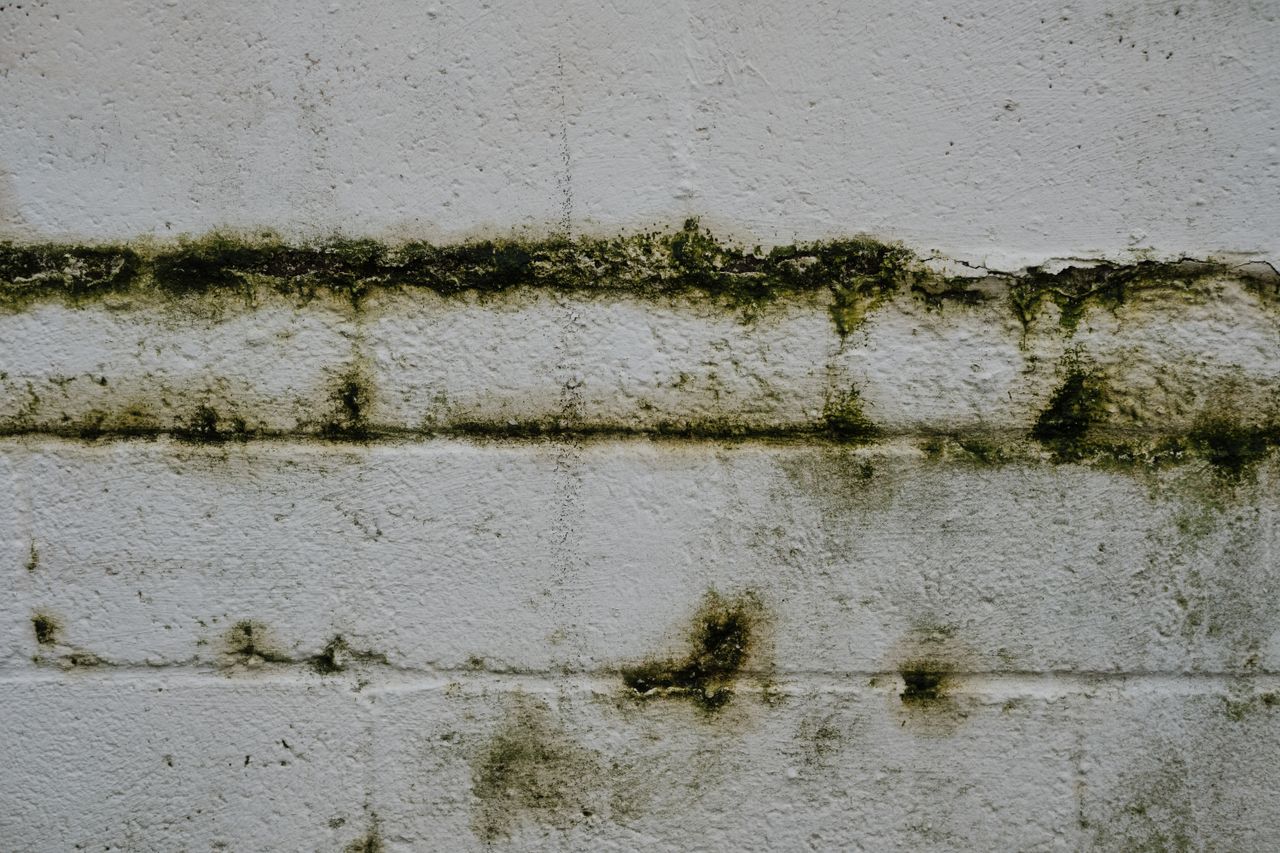
👉 The “tide mark” — a distinct horizontal line where the damp zone transitions to dry wall above — is a characteristic indicator of rising damp. The height of this line corresponds to the equilibrium between capillary rise and evaporation.
White crystalline deposits (efflorescence) on wall surfaces or floor
Likely related to:
- salt deposition from evaporating moisture carried by capillary rise
- salts originating from the soil, concrete or masonry
👉 Efflorescence is one of the strongest visual indicators of rising damp. The salts are deposited where evaporation occurs — typically on the wall surface below the tide mark.
Persistent floor dampness — no correlation with rain, usage or pipes
Likely related to:
- absent or failed DPM beneath the slab
- high water table saturating the soil beneath the slab
👉 Rising damp on the floor surface is constant — it does not come and go with weather or usage. If the dampness fluctuates with rain, external drainage may be contributing (surface water adding to the moisture load).
Dampness worsens during monsoon / wet season
Likely related to:
- rising water table increasing the moisture source beneath the slab
- surface water accumulation against the building perimeter due to poor drainage
👉 Rising damp is always present but may intensify when the water table rises or when heavy rainfall saturates the surrounding ground.
Paint peeling, plaster crumbling or bubbling at the base of ground floor walls
Likely related to:
- moisture and salt damage to the plaster and paint finishes
- salt crystallisation generating expansive pressure within the plaster pore structure
👉 Surface finish damage at the lower portion of the wall — and only the lower portion — is characteristic of rising damp. If the damage is higher up or in patches unrelated to the wall base, the cause is likely different (condensation, pipe leak, external wall ingress).
Damp appears on ground floor only — upper floors are dry
Confirms:
- the source is ground-related (rising damp, site drainage, or water table)
- this is not a pipe leak, roof leak, bathroom leak or external wall issue
👉 Rising damp is a ground floor condition by definition. If similar symptoms appear on upper floors, investigate other causes.
Rising Damp vs Other Causes: Key Differentiators
Rising damp is frequently confused with other dampness causes. These distinctions are critical.
Rising Damp vs Condensation
- Rising damp produces a distinct tide mark and salt efflorescence. Condensation does not produce salts.
- Rising damp is persistent regardless of ventilation or temperature. Condensation worsens in poorly ventilated areas and on cold surfaces.
- Rising damp affects only the lower portion of the wall. Condensation can occur at any height, particularly on surfaces cooled by aircon.
Rising Damp vs Lateral Penetration (External Wall Ingress)
- Rising damp has no rain correlation — it is constant. External wall ingress correlates with rainfall.
- Rising damp produces a horizontal tide mark at a consistent height. External wall ingress produces irregular damp patches corresponding to the crack or defect location.
- Rising damp affects the base of the wall. External wall ingress can occur at any height.
Rising Damp vs Pipe Leak
- Rising damp is diffuse and gradual — spread over a broad area at the wall base. Pipe leaks typically produce localised, concentrated dampness.
- Rising damp does not produce dripping. Pipe leaks may produce active drips or running water.
- A water meter isolation test can rule out pipe leaks — if the meter does not move with all taps closed, there is no supply pipe leak.
Rising Damp vs Bathroom Leak (Lateral Migration from Adjacent Wet Area)
- Rising damp affects only the base of the wall, at a consistent height. Lateral migration from a bathroom can appear at any level, often corresponding to the screed or slab level.
- Rising damp is present across multiple walls, not just the wall adjacent to the bathroom.
- If dampness is limited to a wall that shares a boundary with a wet area, investigate the wet area waterproofing before concluding rising damp.
Verification Methods
Moisture Meter Readings (Gravimetric Profile)
Take moisture readings at multiple heights on the affected wall — from the base up to above the damp zone. Rising damp produces a characteristic profile: highest moisture at the base, gradually decreasing with height, transitioning to ambient moisture levels above the tide mark.
👉 If the moisture is highest at an intermediate height or uniform across the wall, the source is not rising damp.
Salt Analysis (Carbide Method or Laboratory Test)
Test the wall surface and subsurface for the presence and type of salts (chlorides, sulphates, nitrates). Rising damp deposits specific salt types that can be distinguished from other sources.
👉 Hygroscopic salt contamination can be confirmed by testing the plaster — if salts are present, they must be addressed even after the moisture source is stopped.
Water Table Assessment
Determine the water table level relative to the ground floor slab using borehole data or local geological records. A water table at or above the slab level confirms sufficient moisture for capillary rise.
Site Drainage Assessment
Inspect the perimeter drainage, ground falls, surface water collection and any impermeable paving directing water toward the building. Poor site drainage is a contributing factor that can be remediated to reduce rising damp severity.
DPM Investigation
If access is possible (e.g., during renovation works involving floor removal), inspect the DPM beneath the slab for presence, condition and continuity. Punctures, gaps and missing sections confirm the failure mechanism.
Calcium Carbide Test
A destructive test where a sample of the wall or slab material is tested with calcium carbide to determine the actual moisture content. Provides a quantitative measure of moisture within the material — more accurate than surface moisture meters for confirming rising damp.
Water Meter Isolation Test
Shut all taps and observe the meter for 30 minutes. Rules out a pressurised pipe leak as the cause of persistent ground floor dampness. Essential to perform before concluding rising damp.
Why Rising Damp Is Often Misdiagnosed
Common diagnostic mistakes:
- Diagnosing rising damp on upper floors — rising damp is a ground floor condition only. Dampness on upper floors is caused by other mechanisms (pipe leak, condensation, lateral migration, external wall ingress).
- Confusing condensation with rising damp — in Singapore’s high-humidity environment, condensation on cold surfaces (aircon walls, poorly insulated ground floor slabs) can mimic rising damp. Condensation does not produce salt efflorescence or a consistent tide mark.
- Applying waterproof paint or sealant to the interior wall surface — this does not stop the moisture rising. It traps moisture behind the coating, accelerating plaster and substrate deterioration beneath the surface. The moisture eventually pushes the coating off.
- Not removing salt-contaminated plaster after repair — even after the rising damp source is addressed (DPM installed, drainage improved), hygroscopic salts in the existing plaster continue to absorb atmospheric moisture. The wall remains damp and the repair appears to have failed. The contaminated plaster must be hacked off and replaced with salt-resistant render.
- Ignoring site drainage — improving perimeter drainage to direct water away from the building can significantly reduce rising damp severity and may resolve mild cases entirely without DPM intervention.
- Not testing for pipe leaks first — persistent ground floor dampness should always be checked with a water meter isolation test before concluding rising damp. A concealed supply pipe leak beneath the ground floor slab produces identical symptoms.
👉 Rising damp diagnosis requires confirmation through moisture profiling, salt analysis and elimination of other causes — it should not be assumed based on location alone.
These misdiagnoses are frequently encountered in practice, particularly in cases where surface treatments have been applied without addressing the underlying moisture mechanism.
Summary
Rising damp is a ground floor moisture condition driven by capillary action drawing groundwater upward through porous concrete, masonry and mortar.
👉 Rising damp is persistent and constant — it does not correlate with rain events, usage patterns or time of day
👉 The characteristic indicators are a horizontal tide mark on the lower wall, salt efflorescence, and persistent floor dampness with no other explainable source
👉 Singapore’s high humidity slows evaporation, allowing moisture to rise higher and salt contamination to accumulate faster than in drier climates
👉 An absent or failed damp-proof membrane (DPM) beneath the slab is the primary cause — poor site drainage is a major contributing factor
👉 Salt-contaminated plaster must be removed and replaced as part of any rising damp repair — leaving it in place causes persistent dampness even after the moisture source is stopped
👉 Always rule out pipe leaks, condensation and external wall ingress before concluding rising damp
👉 Rising damp is exclusively a ground floor condition — if similar symptoms appear on upper floors, the cause is something else
Understanding capillary action, DPM function and the role of salt contamination is essential to correctly diagnosing and repairing rising damp in Singapore buildings.
Not Sure If It’s Rising Damp or Another Issue?
Rising damp is often confused with condensation, pipe leaks and external wall ingress because the symptoms can appear similar. Without proper testing, it is easy to apply the wrong treatment and leave the underlying cause unresolved.
If you are dealing with persistent ground floor dampness, salt deposits or recurring wall damage, a proper diagnosis should be carried out before any repair is attempted.
You may request a professional leak assessment from Flux Solutions to accurately determine whether rising damp is the cause and identify the correct repair approach.