
Pipe and penetration leaks are among the most commonly misdiagnosed water leakage issues in Singapore properties. Because pipes are often concealed within walls, floors or concrete slabs, leaks do not always appear at the source. Water can travel through structural elements before surfacing elsewhere.
In many cases, pipe leaks are mistaken for waterproofing failure — or vice versa. Understanding the difference between these leak types is critical in determining the correct repair approach.
This guide is based on real pipe and penetration leak cases, observed by Flux Solutions, across Singapore properties, including investigations involving concealed pipe failures, discharge systems and service penetrations.
Quick Answer: What Causes Pipe & Penetration Leaks?
Most pipe and penetration-related leaks in Singapore are caused by one or more of these:
- corroded or deteriorated water supply pipes (copper, galvanised steel)
- joint or fitting failure in supply pipes (PPR, PEX, copper)
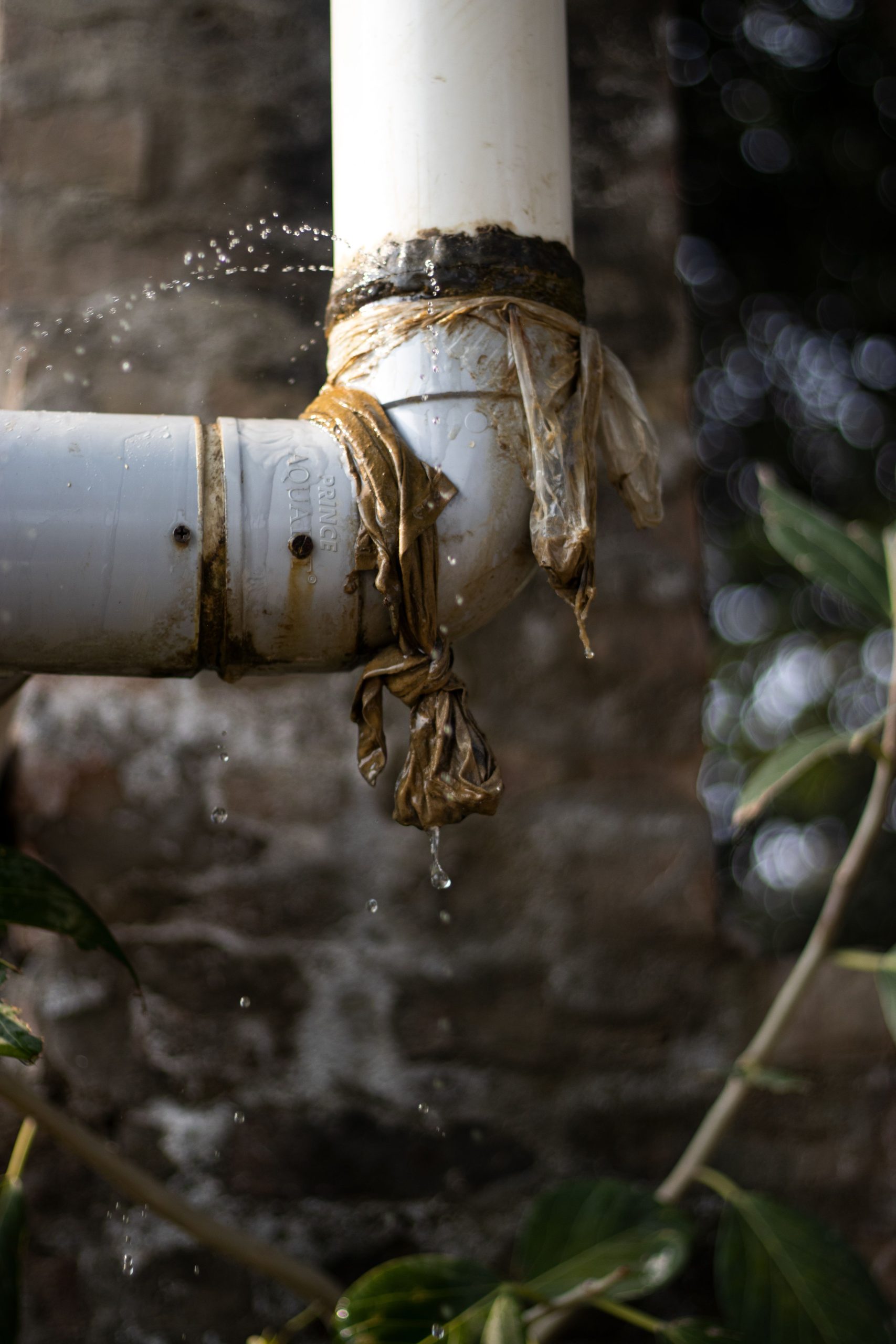
- cracked or separated PVC discharge pipe joints
- concealed rainwater downpipe failure within high-rise box-ups
- failed pipe sleeve or penetration seals through slabs and walls
- aircon condensate pipe penetration seal failure
- electrical conduit penetrations allowing water travel between floors
- water hammer or pressure surge causing joint stress and eventual failure
- insufficient discharge pipe gradient causing pooling at joints
👉 Continuous leakage regardless of weather or usage patterns is the strongest indicator of a pressurised supply pipe leak. Usage-correlated leakage during discharge events points to waste or discharge pipe failure.
How Pipes Are Installed in Singapore Buildings
Understanding how pipes are routed in Singapore buildings is essential to diagnosing where a leak may originate.
Water Supply Pipes (Pressurised)
Supply pipes carry potable water under constant pressure from the mains to all fixtures. Common materials in Singapore:
- Copper pipes: used extensively in older buildings. Joined by soldering or compression fittings. Subject to corrosion over time, particularly at joints and bends.
- Galvanised steel (GI) pipes: found in older HDB and commercial buildings. Corrode internally over time, narrowing the bore and eventually perforating. Threaded joints are common failure points.
- PPR (polypropylene) pipes: common in newer buildings. Joined by heat fusion. Failure typically occurs at fittings or where the fusion was poorly executed.
- PEX (cross-linked polyethylene) pipes: used in some newer installations, often with manifold distribution systems. Failure occurs at crimp or push-fit fittings rather than along the pipe itself.
Supply pipes are routed within cement screed beneath floor tiles, inside wall chases, within ceiling voids, or through risers. Because they are always under pressure, any failure results in continuous water escape regardless of whether fixtures are in use.
Discharge Pipes (Non-Pressurised)
Discharge pipes carry wastewater from fixtures (WC, basin, shower, bathtub) to the building’s drainage system by gravity. Common material is PVC.
- Joints are typically solvent-welded (glued) or use mechanical push-fit connections with rubber seals.
- Pipes require a minimum gradient (fall) to ensure water flows freely. Insufficient gradient causes water to pool at joints, accelerating deterioration and increasing the risk of joint failure.
- Discharge pipes are routed beneath floor slabs, within ceiling voids of the unit below, or within service risers.
Concealed Rainwater Downpipes (High-Rise)
In many Singapore high-rise buildings (HDB and condominiums), rainwater downpipes from the roof are routed within concealed box-ups through individual units.
- These are typically large-diameter PVC pipes running vertically through the building.
- Because they are concealed behind built-in enclosures, leaks are difficult to detect until water has already spread.
- Joint failure, cracking due to building movement, or blockage causing backpressure can all result in leakage within the box-up, which then migrates into the surrounding structure.
👉 Concealed rainwater downpipe leaks are a major issue in Singapore high-rise buildings and are frequently misattributed to bathroom waterproofing failure because the box-up is often located adjacent to or within the bathroom.
Water Supply Pipe Failure Mechanisms
Corrosion (Copper and Galvanised Steel)
Internal corrosion gradually weakens the pipe wall until it perforates.
👉 Copper pipes develop pinhole leaks — small perforations that produce slow, persistent dripping.
👉 Galvanised steel pipes corrode from the inside out, with rust buildup narrowing the bore before eventual perforation. Threaded joints corrode first due to reduced wall thickness at the thread.
👉 Corrosion leaks are continuous — water escapes 24/7 regardless of fixture use.
Joint and Fitting Failure
Failure at pipe connections rather than along the pipe itself.
👉 Solder joints on copper pipes can crack due to thermal cycling or vibration.
👉 PPR heat-fusion joints can fail if the fusion temperature or insertion depth was incorrect during installation — a workmanship defect that may not manifest until years later.
👉 PEX crimp and push-fit fittings can loosen or deform over time, particularly under sustained pressure.
👉 Compression fittings on any pipe type can loosen due to vibration or movement.
Water Hammer and Pressure Surge
Water hammer occurs when a valve or fixture closes abruptly, creating a pressure shockwave through the supply line.
👉 Repeated pressure surges stress pipe joints, fittings and connections.
👉 Over time, this weakens joints to the point of failure.
👉 Water hammer is identifiable by a banging or knocking sound in the pipes when taps or valves close quickly.
Manifold System Failure
Newer condominiums in Singapore commonly use manifold distribution systems where individual supply lines branch from a central manifold to each fixture.
👉 Failure at the manifold connection points or at individual branch fittings can cause leakage within the ceiling void or wall cavity.
👉 Because each branch serves a specific fixture, isolating the failed branch is possible by shutting individual valves at the manifold.
Hot Water Pipe Failure
Hot water supply pipes are subject to additional thermal stress.
👉 Repeated heating and cooling cycles accelerate joint deterioration.
👉 If the water at the symptom location feels warm, the hot water supply line is implicated.
👉 This is a critical diagnostic indicator — warm water at the ceiling or wall symptom confirms a hot water supply pipe leak and rules out waterproofing failure, discharge pipe failure and rainwater ingress.
Discharge Pipe Failure Mechanisms
Solvent-Welded Joint Failure (PVC)
PVC discharge pipe joints rely on solvent cement (glue) to bond the pipe to the fitting.
👉 Poor application during installation (insufficient cement, incomplete insertion, contaminated surfaces) results in weak joints that fail over time.
👉 Building movement and vibration can crack the bond at the joint.
👉 Water escapes at the joint during discharge events — the leak correlates with fixture use (flushing, draining, washing).
Mechanical Joint Seal Failure
Push-fit joints use rubber ring seals to maintain watertightness.
👉 Rubber seals degrade over time, lose compression, or shift out of position.
👉 Pipe movement due to thermal expansion or building settlement can displace the seal.
👉 These joints are common in larger-diameter discharge pipes and stack connections.
Insufficient Gradient
Discharge pipes require adequate gradient (fall) to ensure wastewater flows freely by gravity.
👉 Insufficient fall causes water to pool at low points, typically at joints.
👉 Pooling water stresses the joint seal and accelerates deterioration.
👉 Grease, soap scum and debris accumulate at low points, increasing backpressure and the risk of overflow at joints.
Concealed Rainwater Downpipe Failure
Vertical rainwater downpipes concealed within box-ups in high-rise buildings.
👉 Joint failure due to building movement, thermal expansion or age allows rainwater to escape within the box-up enclosure.
👉 Blockage within the downpipe (debris, leaves, construction waste) causes water to back up and overflow at joints or access points.
👉 Because the downpipe is concealed, the leak may not be discovered until water has migrated extensively into surrounding walls and floors.
👉 This leak type is rain-dependent — it occurs during or after rainfall, which can lead to misdiagnosis as an external wall leak or bathroom waterproofing failure.
Discharge Stack Pipe Failure (Vertical)
In multi-storey buildings, all discharge pipes from individual units connect to a vertical stack pipe running through the building.
👉 Joint failure in the stack can affect multiple floors simultaneously.
👉 Water escapes at the failed joint and travels downward within the riser duct, potentially affecting units on several floors below the failure point.
👉 Stack pipe leaks often cause disputes between neighbours because the source is shared infrastructure and the affected units are not necessarily adjacent to the failure.
Penetration Failure Mechanisms
Penetration leaks occur where pipes, conduits and services pass through slabs, walls or ceilings. These are distinct from pipe leaks — the pipe itself may be intact, but the seal around the penetration has failed.
Pipe Sleeve Seal Failure
Pipes passing through slabs are typically installed within sleeves. The gap between the pipe and the sleeve is sealed with mastic, mortar or a flexible sealant.
👉 Sealant shrinks, cracks or debonds over time.
👉 Pipe movement (thermal expansion, vibration) can break the seal.
👉 Water travels along the pipe through the open gap, bypassing the slab waterproofing entirely.
👉 This leak type can mimic waterproofing failure because water appears on the ceiling below — but the membrane is not the issue.
Fire-Rated Collar and Seal Failure
Fire-rated penetration seals are required where pipes pass through fire-rated slabs and walls.
👉 These seals are designed for fire containment but also provide a water seal.
👉 If the fire collar or intumescent seal has deteriorated, shifted or was improperly installed, it allows water passage.
👉 This is a specialised failure point that is rarely checked during standard leak investigations.
Aircon Condensate Pipe Penetration
Aircon condensate drain pipes pass through external walls or slabs to discharge condensate water.
👉 The penetration around the condensate pipe is frequently poorly sealed — often just packed with mortar or left unsealed.
👉 Rainwater enters through the gap during wind-driven rain, following the pipe into the interior.
👉 This is extremely common in Singapore due to the prevalence of split-system aircon units and the number of penetrations per unit.
👉 Often overlooked during leak investigations because the opening is small and concealed behind the aircon unit.
Electrical Conduit Penetration
Electrical conduits pass through slabs and walls between floors and units.
👉 Water can enter a conduit at one level and travel through the conduit to a completely different location — even a different floor.
👉 The water path is entirely concealed within the conduit, making it very difficult to trace without systematic isolation.
👉 This is a particularly deceptive leak type because the water entry point and the symptom location may have no obvious structural connection.
Diagnostic Behaviour: How to Identify a Pipe or Penetration Leak
Leak is continuous — day and night, regardless of weather or usage
Strongly indicates:
- pressurised water supply pipe leak (the pipe is always under pressure, so the leak never stops)
👉 Perform a water meter isolation test immediately. If the meter moves with all taps closed, a supply pipe leak is confirmed.
👉 If the water at the symptom feels warm, the hot water supply line is implicated.
Leak correlates with fixture use — occurs during flushing, draining or washing
Strongly indicates:
- discharge pipe joint failure
- the leak only occurs when wastewater flows through the pipe
👉 Perform a fixture isolation test — operate each fixture individually to identify which drainage path triggers the leak.
👉 If the leak occurs during WC flush or basin use (not just shower), the discharge pipe is the primary suspect, not the bathroom membrane.
Leak correlates with rainfall — occurs during or after rain
May indicate:
- concealed rainwater downpipe failure within a box-up
- aircon condensate pipe penetration allowing rain ingress
- NOT necessarily an external wall or waterproofing issue
👉 This is the most commonly misdiagnosed scenario. If the leak location is adjacent to a concealed downpipe box-up, investigate the downpipe before attributing the leak to the external wall or bathroom waterproofing.
Leak affects multiple floors simultaneously
Strongly indicates:
- discharge stack pipe failure in the riser
- water escaping at a joint in the vertical stack and travelling downward through the riser duct
👉 If units on multiple floors report leakage at the same riser location, the stack pipe or a shared penetration is the source.
Leak appears at a location with no obvious water source above
May indicate:
- water travelling through an electrical conduit from a different level
- water following a pipe through a failed sleeve seal from a different area
- penetration leak rather than a pipe leak
👉 Check for conduit and pipe penetrations at the symptom location — water may have travelled through the penetration from an entirely different part of the building.
Water meter spinning with all taps closed
Confirms:
- pressurised water supply pipe leak
- this is a definitive test
👉 The supply pipe has failed somewhere within the unit’s pressurised system. The meter will not stop until the leak is found and repaired, or the main supply valve is shut.
Verification Methods
Pipe and penetration leaks often require multiple verification methods because no single test works for all situations.
Water Meter Isolation Test
Shut all taps, outlets and appliances. Observe the water meter for 30 minutes. Any meter movement confirms a pressurised supply pipe leak. This is the single most important first test for any suspected pipe leak.
Fixture Isolation Test
Operate each fixture individually (shower, basin, WC, bathtub, washing machine) while observing the symptom location. Identifies which fixture or drainage path triggers the leak. Essential for distinguishing discharge pipe failure from waterproofing failure.
Pressure Test (Where Applicable)
Pressurise the supply line and monitor for pressure drop over a set period. Confirms a supply pipe leak and can help localise the section.
👉 Caveat: not all supply systems in Singapore can be effectively pressure tested — older trunk-and-branch systems with gate valves may not hold isolation, and the test result must be interpreted carefully in context.
Thermal Imaging
Infrared thermography detects temperature differences caused by concealed water within walls, floors or ceilings.
👉 Particularly effective for hot water supply pipe leaks — the warm water creates a clear thermal signature.
👉 Also useful for mapping the extent of water migration from a concealed leak.
Acoustic Leak Detection
Specialised acoustic equipment amplifies the sound of water escaping from a pressurised pipe within the structure.
👉 Effective for pinpointing the location of concealed supply pipe leaks without hacking.
👉 Less effective in noisy environments or where the pipe is deeply embedded in thick screed or slab.
CCTV Pipe Inspection
A camera is inserted into the discharge pipe to visually inspect the internal condition — looking for cracked joints, displaced seals, blockages, root intrusion or collapse.
👉 Essential for diagnosing concealed rainwater downpipe failures within box-ups.
👉 Also used for discharge stack pipe investigations in risers.
Dye Testing at Penetrations
Coloured dye is introduced at a suspected penetration point while the symptom location is observed.
👉 If dyed water appears at the symptom, the penetration seal has failed and water is travelling through the gap.
👉 Effective for confirming pipe sleeve, conduit and aircon penetration leaks.
Why Pipe and Penetration Leaks Are Often Misdiagnosed
Common diagnostic mistakes:
- Assuming all bathroom ceiling leaks are waterproofing failure — concealed supply pipe leaks and discharge pipe joint failures produce identical ceiling symptoms. The distinguishing factor is the leak’s timing behaviour (continuous vs usage-correlated), not its location.
- Hacking tiles without confirming pipe condition first — destroys the existing waterproofing without identifying whether the pipe or the membrane is the source. If the pipe is the cause, the hacking and re-waterproofing achieves nothing.
- Attributing concealed rainwater downpipe leaks to bathroom waterproofing — because the box-up is often located within or adjacent to the bathroom, the rain-dependent leak is misread as a bathroom membrane failure. The key differentiator is rain correlation without any bathroom usage trigger.
- Relying on a single test method — no single test confirms all pipe leak types. Supply leaks require meter testing, discharge leaks require fixture isolation, penetration leaks require dye testing. Using only one method leads to incomplete diagnosis.
- Overlooking penetration points entirely — pipe sleeve failures, aircon condensate pipe penetrations and electrical conduit pathways are rarely checked during standard investigations but are common and significant water entry paths.
- Ignoring warm water as a diagnostic indicator — if the water at the symptom is warm, it is a hot water supply pipe leak. This single observation rules out waterproofing failure, discharge pipe failure, rainwater ingress and every other non-supply-pipe cause.
👉 Pipe and penetration leaks require systematic elimination, not assumption-based diagnosis.
These misdiagnoses are frequently encountered in practice, particularly in cases where repairs have already been attempted without resolving the underlying issue.
Summary
Pipe and penetration leaks are among the most difficult leaks to diagnose because the water source is concealed and the symptom location is misleading.
👉 Supply pipe leaks are continuous — they do not stop because the pipe is always under pressure
👉 Discharge pipe leaks correlate with fixture use — they occur only when wastewater flows through the failed joint
👉 Concealed rainwater downpipe leaks correlate with rainfall and are frequently misattributed to waterproofing failure
👉 Penetration leaks allow water to bypass waterproofing entirely — the membrane may be intact but water enters through the unsealed gap around the pipe
👉 Warm water at the symptom location is a definitive indicator of a hot water supply pipe leak
👉 Multiple verification methods are required — no single test works for all pipe and penetration leak types
👉 Always confirm the source through systematic testing before hacking or commencing repair
Understanding how pipes are routed, how each pipe type fails and how water travels through penetrations is key to identifying the true source of leakage.
Not Sure If It’s a Pipe Leak or Waterproofing Issue?
Pipe and penetration leaks are often mistaken for waterproofing failure because the symptoms can appear identical. Without proper testing, it is easy to carry out the wrong repair and leave the actual problem unresolved.
If you are dealing with a continuous leak, usage-related leakage or a leak that does not match typical waterproofing patterns, a proper diagnosis should be carried out before any hacking or repair.
You may request a professional leak assessment from Flux Solutions to accurately identify the source and determine the correct repair approach.