
Spalling concrete is one of the most visible and structurally significant defects found in Singapore buildings. It occurs when sections of the concrete cover break away from the surface, exposing the steel reinforcement beneath. In severe cases, loose concrete fragments can dislodge and fall — posing a direct safety hazard to building occupants and the public.
Beyond the structural and safety concerns, spalling has a direct relationship with water leakage:
👉 spalling creates direct water entry points through the building envelope, and water ingress is also the primary cause of the corrosion process that triggers spalling in the first place.
Understanding how spalling occurs, why it accelerates in Singapore’s climate, and how it contributes to water leakage is essential for both building maintenance and leak diagnosis.
This guide is based on real spalling and concrete deterioration cases, observed by Flux Solutions, across Singapore buildings, including conditions linked to water ingress and reinforcement corrosion identified during site investigations.
Quick Answer: What Causes Concrete Spalling?
Concrete spalling in Singapore is caused by one or more of these:
- corrosion of steel reinforcement due to carbonation of the concrete cover
- corrosion of steel reinforcement due to chloride ingress (salt exposure)
- insufficient concrete cover over reinforcement
- poor-quality concrete with high porosity or honeycombing
- water ingress through cracks, joints or porous concrete accelerating corrosion
- thermal cycling causing expansion and contraction stress
- alkali-silica reaction (ASR) in the concrete aggregate
- mechanical impact or overloading
- poor curing during original construction
👉 In Singapore, the combination of high humidity, frequent rainfall, warm temperatures and coastal salt exposure creates ideal conditions for accelerated reinforcement corrosion — making spalling one of the most common structural defects in ageing buildings.
How Concrete Spalling Actually Happens
Concrete spalling is not a surface problem — it is the visible end stage of a progressive corrosion process that begins deep within the concrete.
The process follows a predictable sequence:
Stage 1 — Protective Layer Intact
When concrete is first cast, the cement paste creates a highly alkaline environment (pH 12–13) around the steel reinforcement. This alkalinity forms a thin passive oxide layer on the steel surface that prevents corrosion. As long as this alkaline environment is maintained, the steel does not corrode.
Stage 2 — Carbonation or Chloride Ingress
Over time, carbon dioxide from the atmosphere penetrates into the concrete from the exposed surface inward — a process called carbonation. Carbonation reduces the alkalinity of the concrete. When the carbonation front reaches the depth of the steel reinforcement, the passive oxide layer is destroyed and corrosion can begin.
Alternatively, chloride ions (from coastal salt spray, contaminated aggregates or de-icing salts) can penetrate the concrete and attack the passive layer directly — even in concrete that has not yet carbonated.
👉 In Singapore, carbonation is the dominant mechanism in inland buildings. Coastal and waterfront properties are additionally subject to chloride-induced corrosion.
Stage 3 — Steel Corrosion Begins
Once the passive layer is compromised, the steel reinforcement begins to corrode in the presence of moisture and oxygen.
👉 Corrosion produces iron oxide (rust), which occupies 2–6 times the volume of the original steel.
👉 This expansion generates internal tensile pressure within the concrete surrounding the rebar.
Stage 4 — Cracking
The expansive pressure from the growing rust exceeds the tensile strength of the concrete. Cracks form parallel to the reinforcement — initially as hairline cracks on the surface, then widening over time.
👉 These cracks accelerate the process by allowing more moisture and CO2 to reach the steel, further increasing the corrosion rate.
Stage 5 — Delamination and Spalling
The concrete cover separates from the reinforcement layer (delamination). Eventually, sections of concrete break away and fall from the surface — this is spalling.
👉 By the time spalling is visible, the corrosion has been progressing for years. The exposed steel is already significantly reduced in cross-section.
👉 Spalling is not the beginning of the problem — it is the end stage of a long deterioration process.
Why Spalling Is Accelerated in Singapore
Singapore’s tropical climate creates conditions that accelerate every stage of the spalling process.
High Humidity and Frequent Rainfall
👉 Concrete is frequently wet or damp, providing the moisture necessary for corrosion to proceed.
👉 Wet-dry cycling — where concrete alternates between wet and dry conditions — is the most aggressive environment for reinforcement corrosion. Singapore’s climate of heavy rain followed by intense sun creates exactly this condition.
Warm Temperatures
👉 Higher temperatures increase the rate of carbonation and the rate of corrosion.
👉 Chemical reactions proceed faster in warm environments — corrosion that might take decades in a temperate climate can progress significantly faster in Singapore.
Coastal Salt Exposure
👉 Singapore is an island — many buildings are within range of airborne salt spray from the sea.
👉 Chloride ions from salt spray penetrate the concrete surface and attack the reinforcement directly, bypassing the carbonation mechanism.
👉 Buildings within 1–2km of the coast are at elevated risk of chloride-induced corrosion.
High CO2 Concentration in Urban Areas
👉 Vehicular and industrial emissions increase CO2 concentration in urban environments, accelerating the carbonation rate of exposed concrete surfaces.
Spalling and Water Leakage: The Two-Way Relationship
Spalling and water leakage are directly linked — each causes and worsens the other.
Water Ingress Causes Spalling
👉 Water entering through cracks, joints, porous concrete or failed waterproofing provides the moisture needed for reinforcement corrosion.
👉 Without moisture, corrosion cannot proceed even if carbonation has reached the steel. Keeping water out of the concrete is the most effective way to prevent spalling.
👉 Leaking roofs, balconies, bathrooms and external walls that allow water into the structural slab are direct contributors to spalling in the slab and beams below.
Spalling Causes Water Ingress
👉 Once concrete has spalled, the exposed area becomes a direct water entry point.
👉 Rainwater enters through the open spall, contacts the corroding steel, and migrates through the concrete to appear as leakage on the interior.
👉 The cracks that precede spalling (Stage 4) also serve as water pathways — water ingress through spalling-related cracks is frequently misattributed to other causes.
The Acceleration Cycle
👉 Water enters → corrosion proceeds → cracking occurs → more water enters → corrosion accelerates → spalling occurs → even more water enters.
👉 This is a self-reinforcing cycle. Without intervention, the rate of deterioration increases over time.
Types of Spalling and Where They Occur
External Wall Spalling
The most visible form of spalling — concrete cover breaks away from external wall surfaces or facade elements.
👉 Often occurs at floor slab edges where the slab meets the external wall — the concrete cover is typically thinnest at this transition.
👉 Spalling on external walls allows direct rainwater ingress into the wall structure.
👉 Falling concrete fragments from upper floors pose a serious safety hazard to pedestrians and residents below.
👉 In Singapore, BCA requires periodic facade inspection for buildings above a certain age and height to identify and address spalling before fragments dislodge.
Soffit Spalling (Ceiling of Covered Areas)
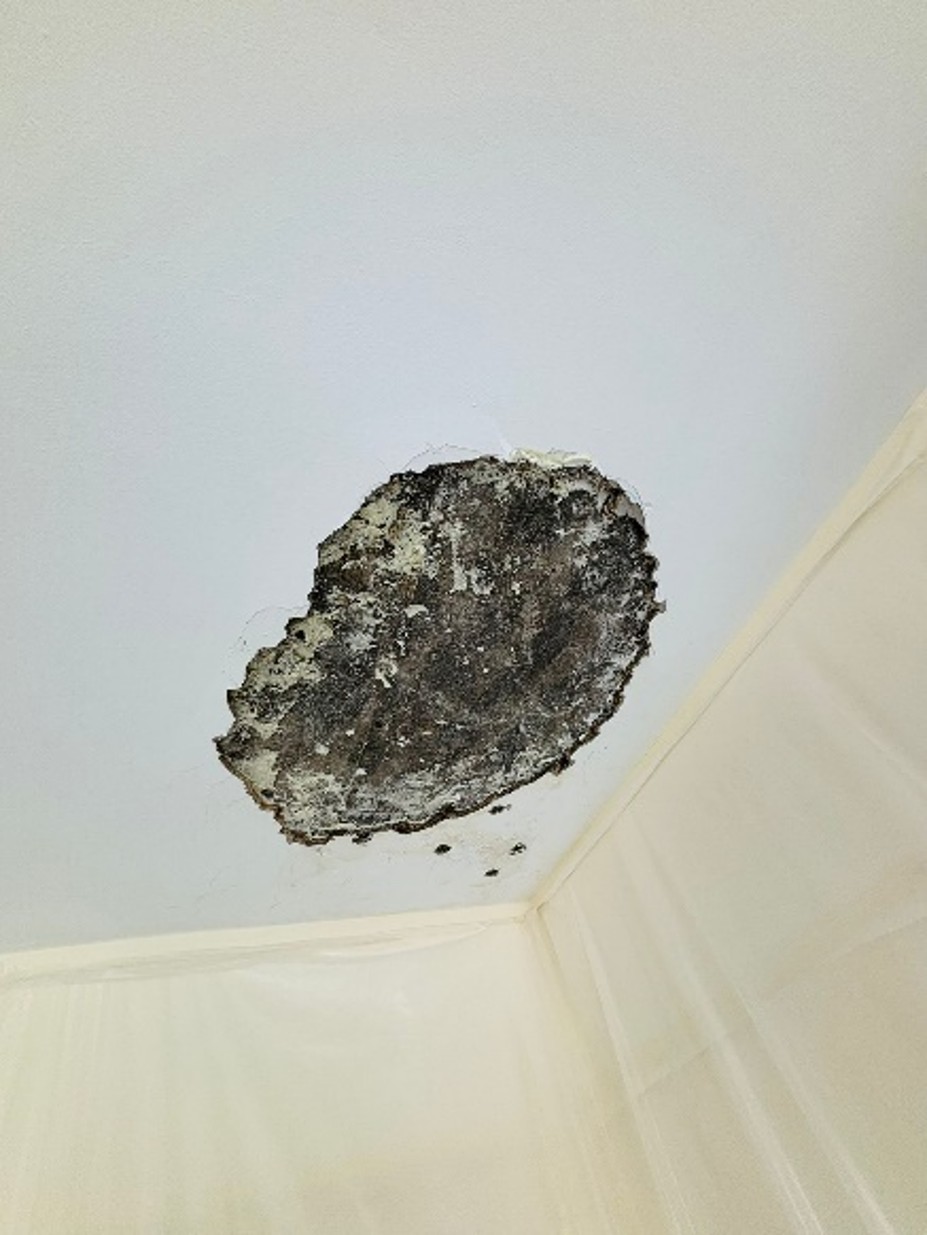
Spalling on the underside of concrete slabs — common beneath balconies, corridors, carpark decks and void decks.
👉 Soffits are exposed to moisture from above (leaking waterproofing, bathroom leaks, balcony leaks) and from condensation below.
👉 Soffit spalling is a strong indicator that the waterproofing system above has failed — water has been reaching the reinforcement for an extended period.
👉 Loose concrete hanging from soffits is an immediate safety hazard.
Beam and Column Spalling
Spalling on structural beams and columns — these are primary load-bearing elements.
👉 Corrosion of beam and column reinforcement reduces the structural capacity of the element.
👉 This is the most structurally critical form of spalling — loss of reinforcement cross-section in beams and columns directly affects the building’s load-bearing capability.
👉 Beam spalling in exposed areas (carparks, ground floor columns) is common in Singapore due to direct weather exposure and splash zones.
Parapet and Ledge Spalling
Spalling on parapet walls, roof ledges and architectural features.
👉 Parapets are exposed to rain on both sides and receive minimal maintenance.
👉 Water ponding on parapet tops accelerates carbonation and corrosion.
👉 Spalling parapets can dislodge and fall from the building edge — a high-risk safety concern.
Spalling at Pipe Penetrations and Embedded Services
Spalling around pipe sleeves, conduit penetrations and embedded fixings.
👉 Dissimilar metals in contact with reinforcement (e.g., steel pipes touching rebar) can cause galvanic corrosion — accelerating localised corrosion at the penetration.
👉 Poorly sealed penetrations allow water to reach the reinforcement in the surrounding area, causing localised spalling around the penetration.
How to Identify Spalling and Its Precursors
Spalling is the end stage — earlier signs indicate corrosion is already in progress before concrete breaks away.
Rust Staining on Concrete Surface
Brown or orange staining on the concrete surface without visible cracking or spalling.
👉 Rust products are migrating to the surface through the concrete pores.
👉 This indicates active corrosion of the reinforcement beneath — the steel is corroding but the concrete cover has not yet cracked.
👉 This is an early warning sign that spalling will follow if not addressed.
Hairline Cracking Parallel to Reinforcement
Fine cracks running in lines that correspond to the reinforcement layout (typically parallel and evenly spaced).
👉 The expansive pressure from corrosion has begun to crack the concrete cover.
👉 Tapping the concrete in these areas may produce a hollow sound — indicating delamination has started beneath the surface.
Hollow Sound on Tapping (Delamination)
When the concrete surface is tapped with a hammer or suitable tool, a hollow or drum-like sound indicates the cover has delaminated from the reinforcement layer.
👉 The concrete is no longer bonded — it is loose and will eventually fall as a spall.
👉 Delamination can cover large areas that appear visually intact on the surface.
Active Spalling
Visible concrete fragments have broken away, exposing corroded reinforcement.
👉 By this stage, the steel has lost a measurable portion of its cross-section.
👉 The exposed area will continue to deteriorate rapidly unless repaired and protected.
Diagnostic Behaviour: Spalling as a Leak Indicator
Ceiling stain or drip directly below a spalled area on the floor above
Likely related to:
- water entering through the spalled area and migrating through the slab
- the spalling itself was likely caused by water ingress from a failed waterproofing system above (bathroom, balcony, roof)
👉 The spalling is both a symptom of the original leak and a secondary water entry point. Both the waterproofing source and the spalling must be repaired.
Rust staining on soffit with no visible water source above
Likely related to:
- slow, long-term moisture ingress through the slab from a minor waterproofing deficiency above
- condensation providing sufficient moisture for corrosion in sheltered but humid soffits
👉 Even without visible dripping, moisture migration through the slab is sufficient to cause corrosion. Investigate the waterproofing condition of the area directly above.
Spalling concentrated at slab edges along external walls
Likely related to:
- rainwater ingress through the external wall or wall-to-slab junction
- inadequate concrete cover at the slab edge (a construction deficiency)
👉 This pattern indicates external water is reaching the slab edge reinforcement. The external wall must be assessed for cracks, sealant failure and facade defects.
Spalling at beam soffits in carpark or void deck
Likely related to:
- direct weather exposure and splash zone moisture
- carbonation progressing from the exposed soffit surface inward
- leaking waterproofing from the deck above (if the beam supports a wet area)
👉 Beam spalling in these locations requires structural assessment — the beam is a primary load-bearing element.
Verification and Assessment Methods
Spalling assessment requires both surface inspection and investigation of the corrosion condition beneath the surface.
Visual Survey
Systematic visual inspection of all concrete surfaces for rust staining, cracking patterns, delamination and active spalls. Document the location, extent and severity of each defect. Photographic records are essential.
Hammer Tap / Sounding Survey
Tapping the concrete surface systematically with a hammer or chain drag to identify hollow (delaminated) areas that are not yet visually apparent. This reveals the true extent of deterioration — which is typically much larger than the visible spalling suggests.
Concrete Cover Survey
Using a covermeter (electromagnetic device) to measure the actual depth of concrete cover over the reinforcement at multiple points. Identifies areas where the cover is below the design specification — these are the highest-risk locations for future spalling.
Carbonation Depth Test
A freshly broken concrete sample is sprayed with phenolphthalein indicator. Uncarbonated concrete turns pink; carbonated concrete remains colourless. The depth of the colourless zone indicates how far carbonation has progressed from the surface.
👉 If the carbonation depth has reached or exceeded the reinforcement depth, corrosion is expected to be active at that location.
Chloride Content Test
Concrete samples are taken at various depths and tested for chloride ion concentration. Identifies whether chloride contamination has reached the reinforcement level — relevant for coastal properties and buildings exposed to salt spray.
Half-Cell Potential Mapping
An electrochemical test that measures the corrosion potential of the reinforcement across a concrete surface. Produces a contour map showing areas of active corrosion, passive (non-corroding) steel, and intermediate zones.
👉 This is the most reliable method for identifying areas where corrosion is active but spalling has not yet occurred — enabling preventive repair before the damage becomes visible.
Structural Assessment
For spalling on beams, columns and other structural elements, a structural engineer must assess the remaining cross-section of both the concrete and the reinforcement to determine whether the structural capacity has been compromised.
Why Spalling Is Often Mismanaged
Common mistakes in dealing with spalling:
- Cosmetic patching without addressing corrosion — patching over corroded steel with mortar or render without cleaning the steel, treating the corrosion or applying protective coatings. The corrosion continues beneath the patch and the spalling recurs.
- Repairing the spall without fixing the water source — if the water ingress that caused the corrosion is not stopped (failed waterproofing, leaking pipe, external wall crack), the repaired area and adjacent areas will continue to corrode.
- Underestimating the extent of damage — visible spalling represents only a fraction of the deterioration. Delaminated areas surrounding the spall may be several times larger than the visible defect. Repair that only addresses the visible spall leaves delaminated concrete in place.
- Ignoring early warning signs — rust staining and hairline cracking are repaired cosmetically (painted over) rather than investigated. By the time spalling occurs, the corrosion is advanced and the repair is significantly more extensive and costly.
- Not assessing structural implications — spalling on beams and columns is treated as a maintenance issue rather than a structural concern. Loss of reinforcement cross-section in load-bearing elements requires engineering assessment.
👉 Effective spalling repair requires three things: stop the water source, treat the corrosion, and restore the concrete cover with a compatible repair system. Omitting any one of these results in recurring failure.
These issues are frequently encountered in practice, particularly in cases where surface patch repairs have been carried out without addressing the underlying corrosion and moisture source.
Singapore Regulatory Context
BCA Periodic Facade Inspection
Buildings in Singapore above a certain age and height are required to undergo periodic facade inspections under BCA regulations. The inspection includes identification of spalling, delamination, cracked tiles and other facade defects that pose a safety risk.
👉 Building owners and management corporations are responsible for ensuring inspections are carried out on schedule and that identified defects are rectified.
Safety Hazard Reporting
Spalling concrete that poses a risk of falling onto public areas, walkways or occupied spaces must be addressed as a safety priority — not deferred as routine maintenance.
👉 Loose or delaminated concrete should be removed or secured immediately, even before full repair works are planned.
Summary
Spalling concrete in Singapore is the visible end stage of a progressive reinforcement corrosion process driven by carbonation, chloride ingress and moisture.
👉 Spalling does not appear suddenly — it is preceded by rust staining, hairline cracking and delamination, all of which are detectable before concrete breaks away
👉 Water ingress is both the primary accelerator of corrosion and a consequence of spalling — creating a self-reinforcing deterioration cycle
👉 Singapore’s tropical climate — high humidity, frequent rainfall, warm temperatures and coastal salt exposure — accelerates every stage of the corrosion process
👉 Visible spalling represents only a fraction of the total deterioration — delaminated areas beneath an intact surface can be several times larger
👉 Spalling on beams and columns is a structural concern requiring engineering assessment, not just maintenance
👉 Effective repair requires stopping the water source, treating the corrosion and restoring the concrete cover — cosmetic patching without addressing all three will fail
👉 Spalling at any location should prompt investigation of the waterproofing system above — the spalling is telling you water has been reaching the reinforcement
Understanding the corrosion-spalling-leakage cycle is essential to both preventing further deterioration and correctly diagnosing water leakage in ageing Singapore buildings.
Not Sure If Spalling Is Caused by a Leak?
Spalling concrete is often linked to underlying water ingress, but the source of that moisture is not always immediately obvious. Without identifying the cause of corrosion, repairs may only address the visible damage while deterioration continues beneath the surface.
If you are dealing with spalling concrete, ceiling leakage below a slab, or visible rust staining and cracking, a proper assessment should be carried out to determine whether water ingress is contributing to the problem.
You may request a professional leak assessment from Flux Solutions to identify the moisture source and determine the appropriate repair approach.